Start with a test, not more pressure.
Compare controlled and aggressive approaches and learn what must be checked before expanding a cleaning method.
CONTROLLED / PROBLEM APPROACH
Change the method.
See what matters.
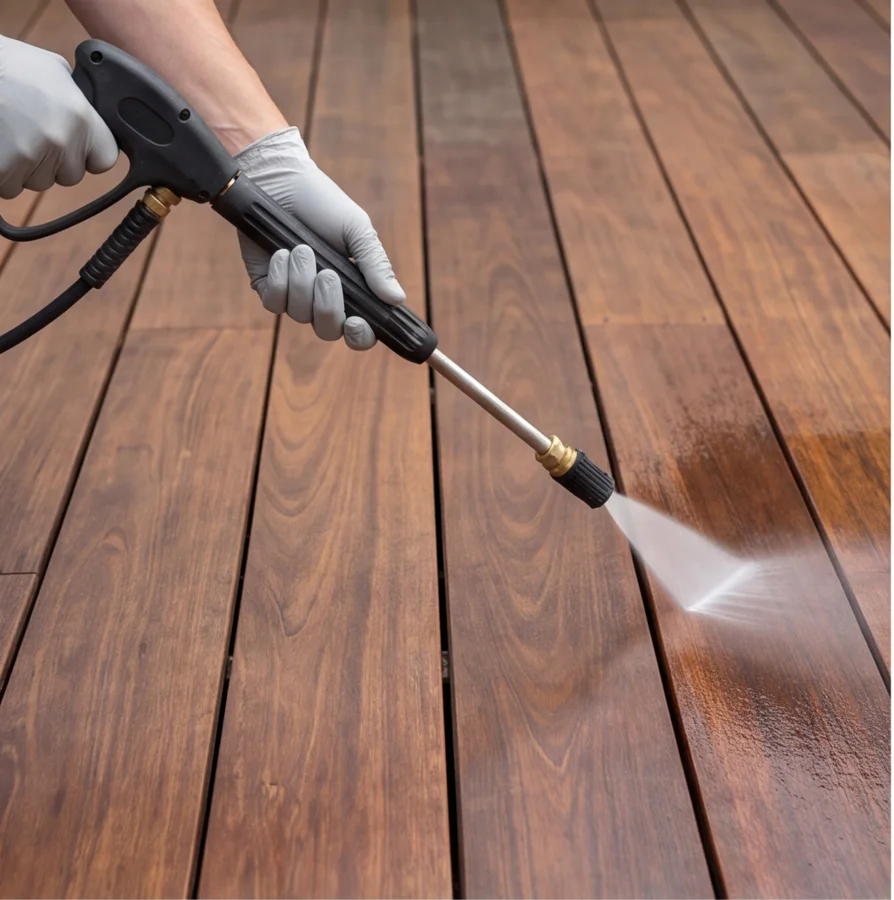
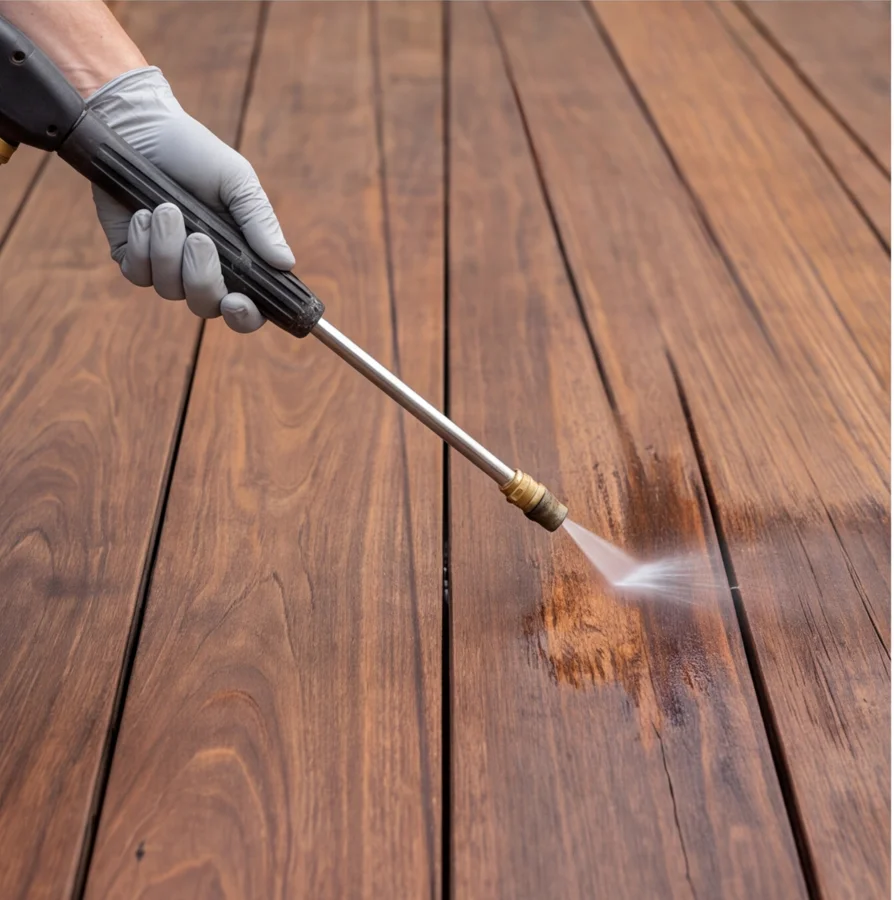
Visualization · Reference-matched surface scenarios. Appearance is illustrative; this is not a measured before-and-after project.
Pressure is not the whole method
Controlled: A controlled test with a compatible method, suitable fan and working distance.
Problem: Concentrated close pressure can mark or disrupt the surface.
No universal pressure or nozzle distance is prescribed here. Follow the equipment, cleaner and decking guidance, then inspect the fully dry test.
Other mistakes to investigate
- Uneven sanding: verify preparation before extending a trial.
- Trapped moisture: fix the wetting source and verify readiness.
- Incompatible treatments: identify old and proposed products before combining steps.
- Ignored metal staining: investigate the connection and water pathways, not only the color.
THE TOOL BENCH
Know the role of the tool.
Tool selection follows the surface assessment and product instructions.
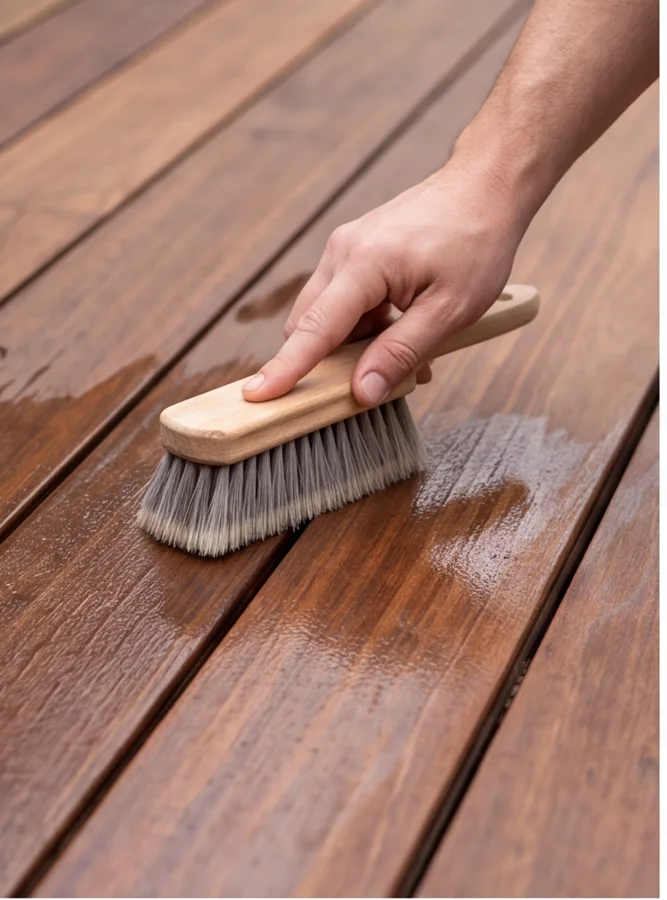
Verify the complete method.
Match the equipment, nozzle, distance, cleaner, wood and existing coating. Record your tested method rather than borrowing a pressure setting from a different project. Stop if the test creates marks or raised fibers.
Read the pressure-washing decision guide ↗Evidence behind the workflow
Visualizations organize observations. The actual product label, coating history and on-site assessment control the work. No image establishes species identity, moisture readiness, chemical compatibility or structural condition.
Build a condition-based care plan ↗Continue the study
The restoration studio
Explore one deck through surface conditions, inspection and two different appearance goals.
What am I looking at?
Move from the full deck to a board and surface detail. Compare visual clues without treating them as a diagnosis.
A gray deck can still be your goal.
Compare naturally weathered, dirty and cleaned-gray Ipe appearance scenarios.
Restore color. Respect the sequence.
Explore assessment, cleaning, drying, preparation and optional finishing on the same reference deck.