A gray deck can still be your goal.
Compare naturally weathered, dirty and cleaned-gray Ipe appearance scenarios.
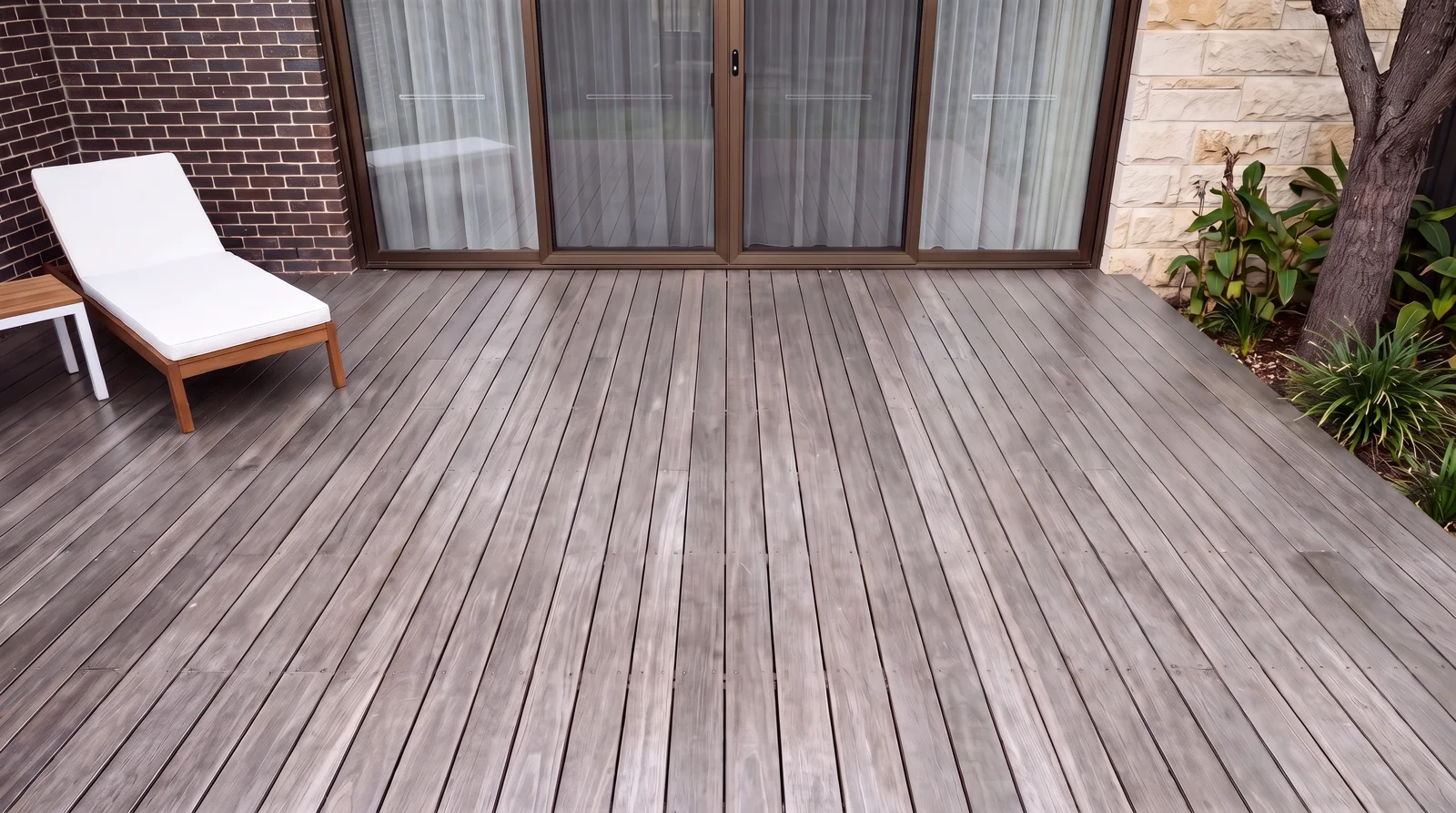
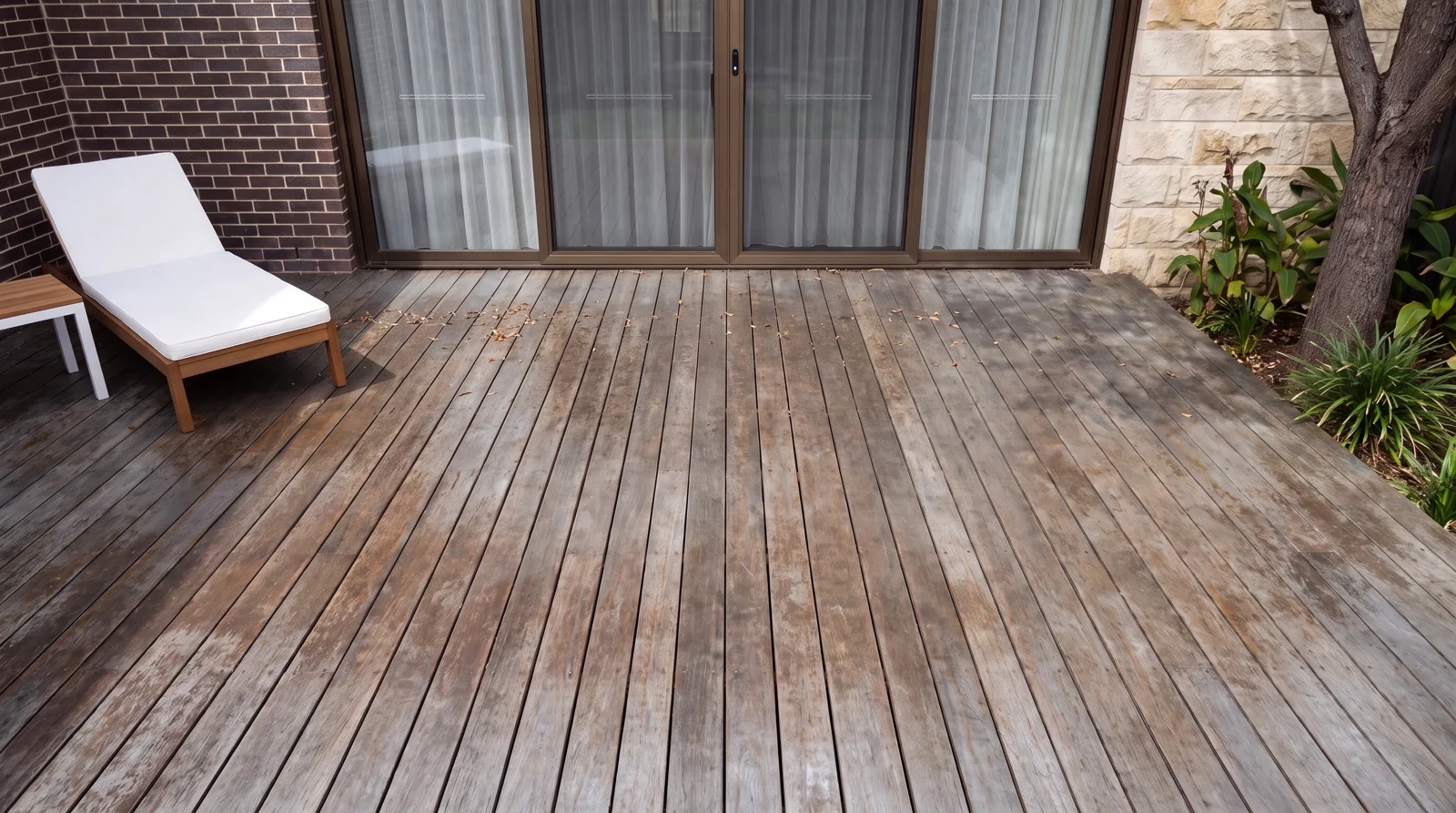
Visualization · Reference-matched surface scenarios. Appearance is illustrative; this is not a measured before-and-after project.
Gray is an appearance.
Clean is a condition.
A retained silver tone can be an intentional outcome. Compare the fully dry test with an untreated area. Cleaning may alter the surface without returning it to its original color, and gray color alone cannot establish the deck’s physical condition.
THE RESTORATION SEQUENCE
One deck.
A considered sequence.
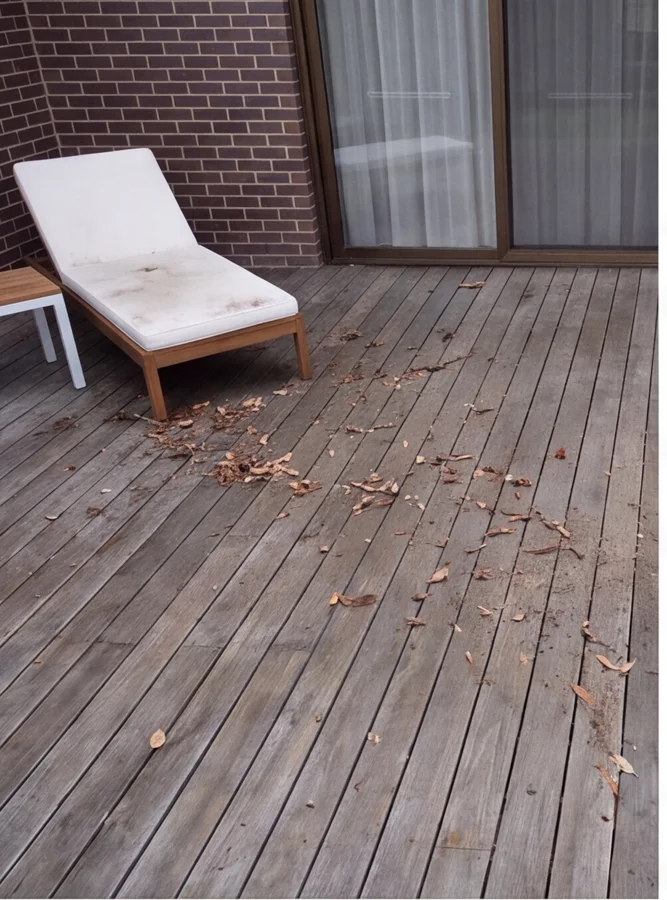
Inspect the starting condition
Illustration · Sequence order, not elapsed time. Tools and treatments require product-specific instructions.
Record the broad view and the affected surface. Loose components, soft areas or unknown structural condition need assessment before surface work.
Clear accessible loose material without damaging the surface. Observe gaps, drainage paths and sheltered zones.
Use the cleaner label and a representative test area. Confirm dilution, tools, protection, contact time and rinsing. Never mix treatments by guesswork.
Cleaning can leave wood gray. A wet surface can look richer than its dry result; do not use that temporary color to approve the outcome.
Use the product’s moisture, weather and substrate requirements. A fixed number of hours or a dry-looking face does not establish readiness.
Approve the dried result. Keep product records and photographs. Use the label’s return-to-use instructions and inspect according to exposure.
Evidence behind the workflow
Visualizations organize observations. The actual product label, coating history and on-site assessment control the work. No image establishes species identity, moisture readiness, chemical compatibility or structural condition.
Build a condition-based care plan ↗Continue the study
The restoration studio
Explore one deck through surface conditions, inspection and two different appearance goals.
What am I looking at?
Move from the full deck to a board and surface detail. Compare visual clues without treating them as a diagnosis.
Restore color. Respect the sequence.
Explore assessment, cleaning, drying, preparation and optional finishing on the same reference deck.
Start with a test, not more pressure.
Compare controlled and aggressive approaches and learn what must be checked before expanding a cleaning method.