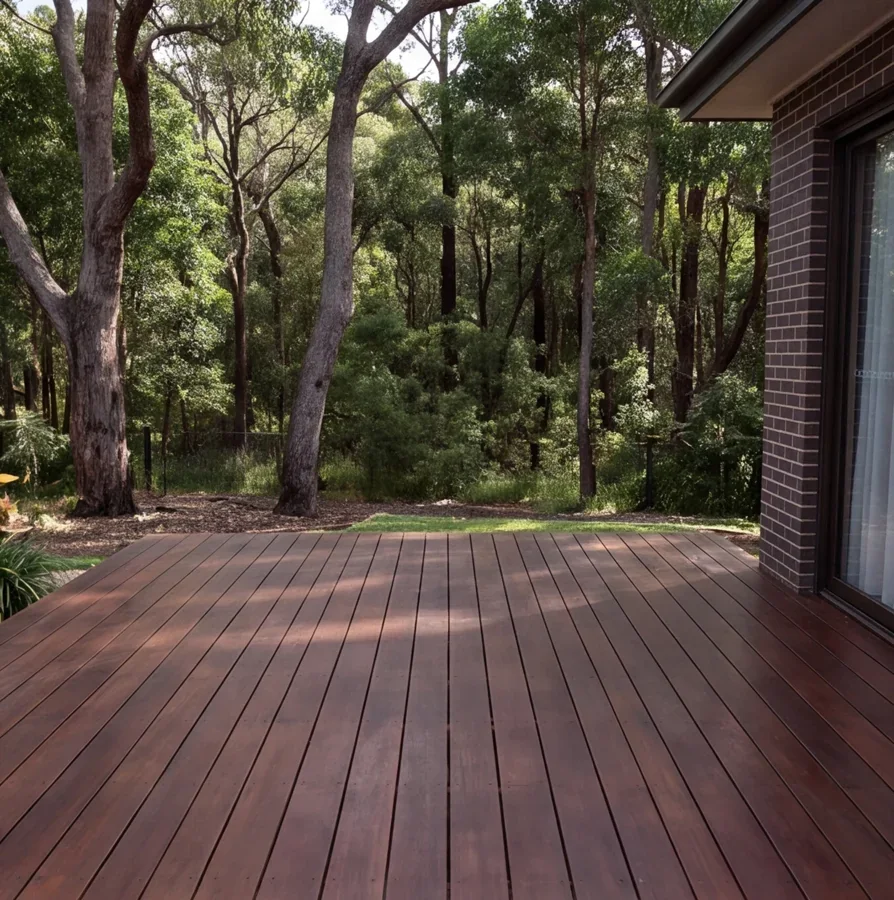
Wood decking beneath a roof beside shaded trees.
Illustrative care scenario. It does not prescribe pressure, chemistry, drying time or establish a safe condition for a real deck.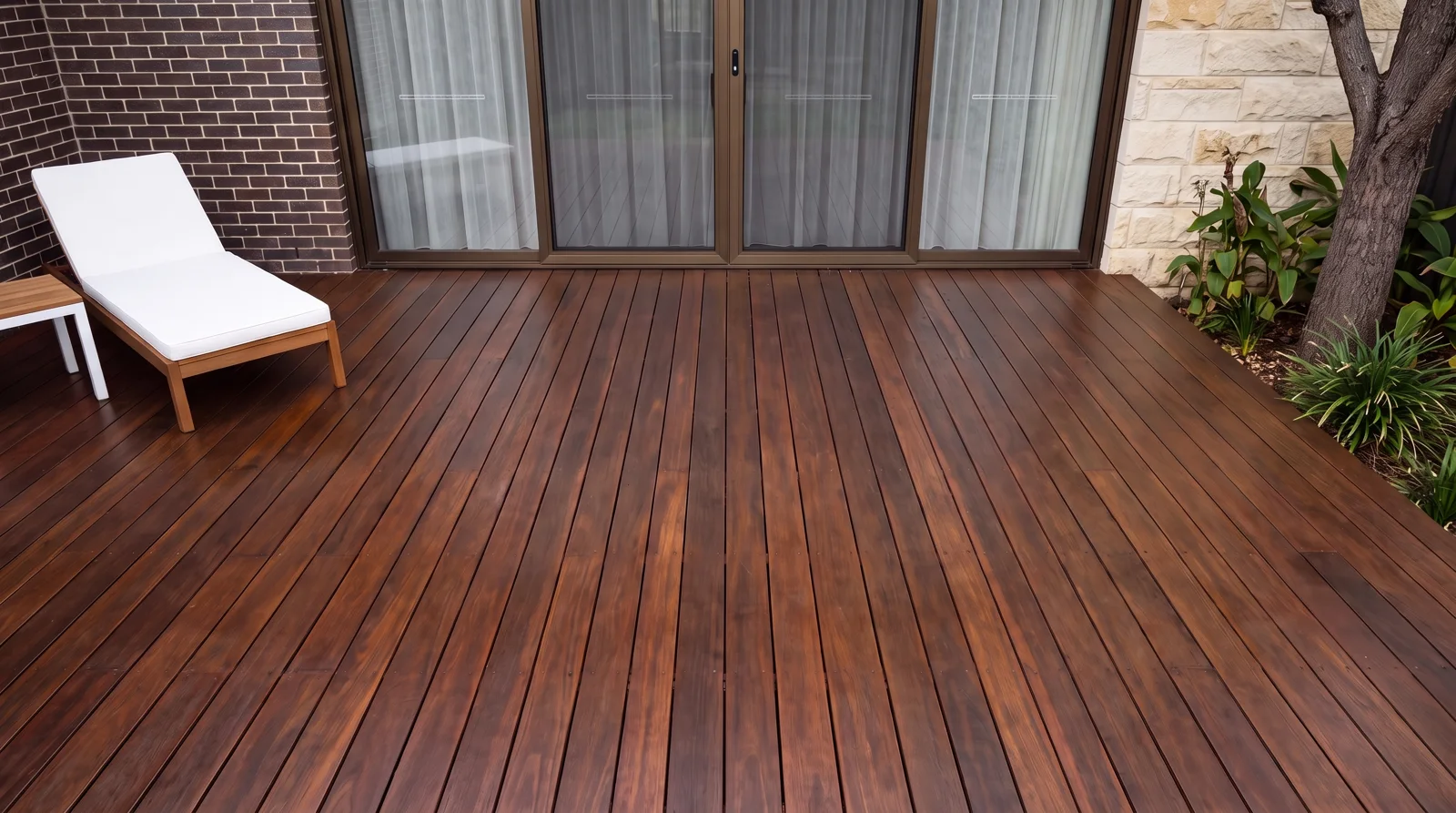
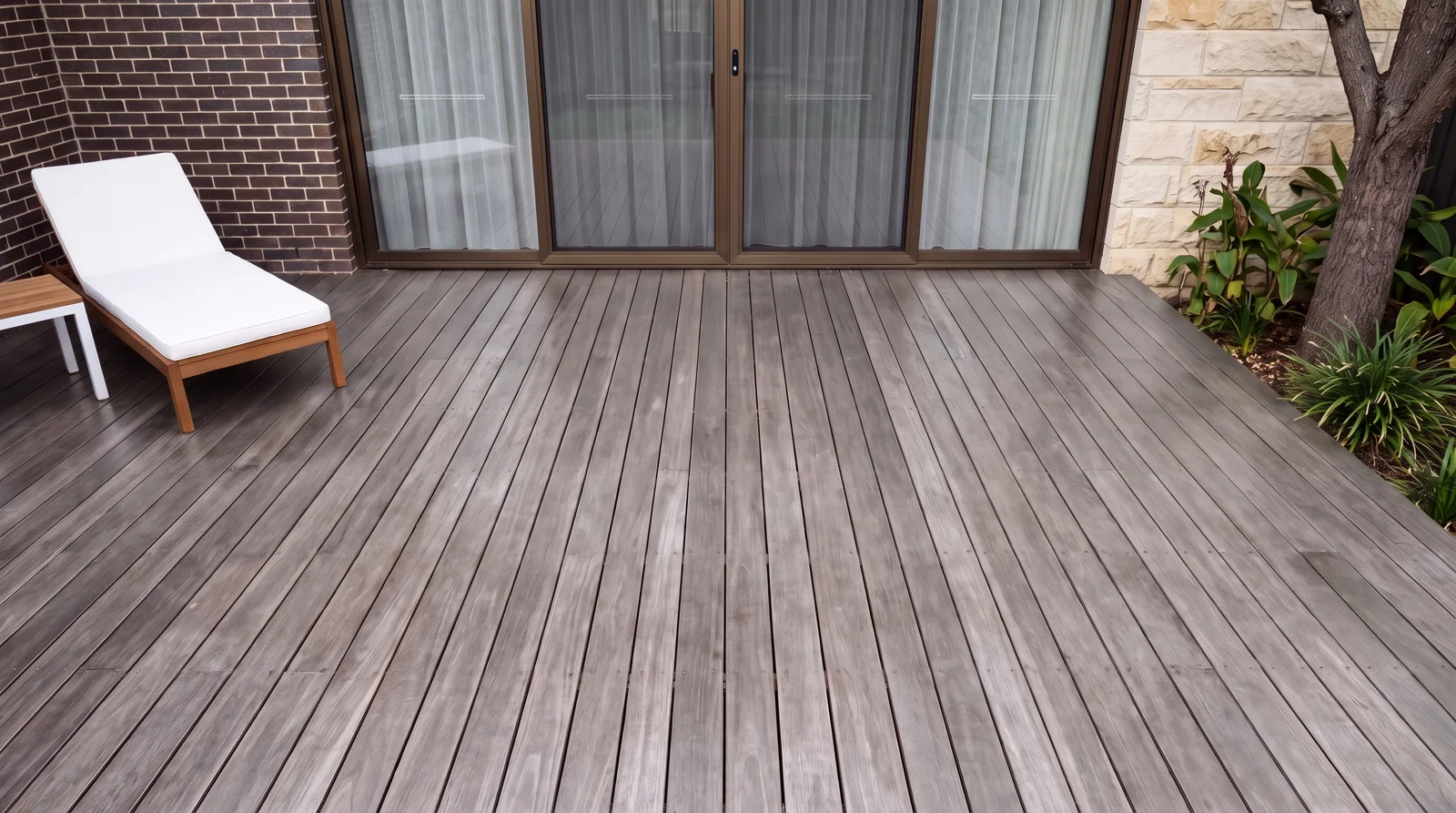
Visualization · Reference-matched surface scenarios. Appearance is illustrative; this is not a measured before-and-after project.
Read all of the weather limits
The application window can involve air temperature, surface temperature, moisture, humidity and the time before rain or dew. A weather app gives only part of that picture. A sun-heated board can differ from the reported air temperature, while a sheltered corner can dry differently from an exposed one.
Plan a workable area
Choose an application sequence that the crew can complete within the product’s working limits. Include transitions, stairs and places where stopping could affect appearance. Keep product instructions available at the work area rather than relying on a remembered rule from a previous deck.
Separate dry, recoat and service
A surface that feels dry may not be ready for another coat, foot traffic, furniture or full exposure. Record each relevant requirement from the label and explain it to the people using the property. Weather changes can require rescheduling. The planner records conditions; it does not guarantee a ready date.
Plan for the whole application window
A forecast without rain during the application is only one part of the decision. The selected product may set requirements for air temperature, surface temperature, moisture condition and the period before rain or use. Read the current instructions for the exact finish and check the whole window, including the time after the last section is completed.
Surface conditions can differ from the weather app. A dark board in direct sun may be much warmer than shaded air. A sheltered corner may dry more slowly than the open field. Dew or overnight condensation can affect a surface even when no rain is forecast. Inspect the actual work area rather than treating the regional forecast as a surface measurement.
Dry to the required condition, not to a borrowed number of days
Cleaning methods, recent rain, shade, airflow and the assembly all influence the starting condition. A fixed waiting period copied from another deck cannot establish readiness. Use the selected product's stated assessment or measurement method, including any applicable instrument settings and limitations.
If moisture measurements are used, retain where and how they were taken. A single reading at the sunniest board may not represent the shaded edge or an area below a planter. The purpose is to assess the relevant condition for the application, not to make a universal statement about moisture throughout every board.
| Before starting | During the work | Before reopening |
|---|---|---|
| Verify product limits and surface condition | Recheck changing sun, wind and temperature | Follow the product's use and cure guidance |
| Confirm a suitable weather window | Keep the working edge and application consistent | Check for areas affected by unexpected wetting |
| Plan access and exit | Avoid trapping the crew behind wet treatment | Remove barriers only when appropriate |
| Protect adjacent surfaces as directed | Record an interruption before continuing | Keep the application record for later care |
Divide a large deck into workable sections
Choose boundaries that make sense for the product and the board layout. A work plan should identify where the crew starts, how it exits and which areas remain inaccessible. Avoid improvised stopping points that leave obvious lap marks or require walking across recently treated work. Follow the product's directions for maintaining a wet edge or joining sections where applicable.
For an occupied property, include furniture movement, pets, deliveries and access to doors in the schedule. These are ordinary reasons a good weather window can still become an unsuitable work window. A smaller completed section may be more practical than beginning the entire deck and being forced to stop halfway through.
If the weather changes, preserve the event
Record when rain, heavy dew, excessive heat or another interruption occurred relative to application. Identify the affected area and contact the product manufacturer for the appropriate response. Do not assume that another coat will correct an uncertain result. Assess the dry condition under the product's guidance before selecting remedial work.
The USDA finishing reference explains why moisture and exposure matter to finishes. The exact application limits come from the selected product. Use the maintenance record to retain conditions, dates and the treatment sequence so the next renewal begins with evidence instead of guesses.
A DECK-CARE SITUATION
A deck-care situation
The forecast offers a dry afternoon, but the product requires a longer rain-free period than the work plan allows. The crew postpones application rather than treating the absence of rain during brushing as sufficient.
Your review record
0 of 4 questions reviewed
A checked box records your review. It is not a professional approval.