
An observer examining the surface of a wood terrace.
Illustrative care scenario. It does not prescribe pressure, chemistry, drying time or establish a safe condition for a real deck.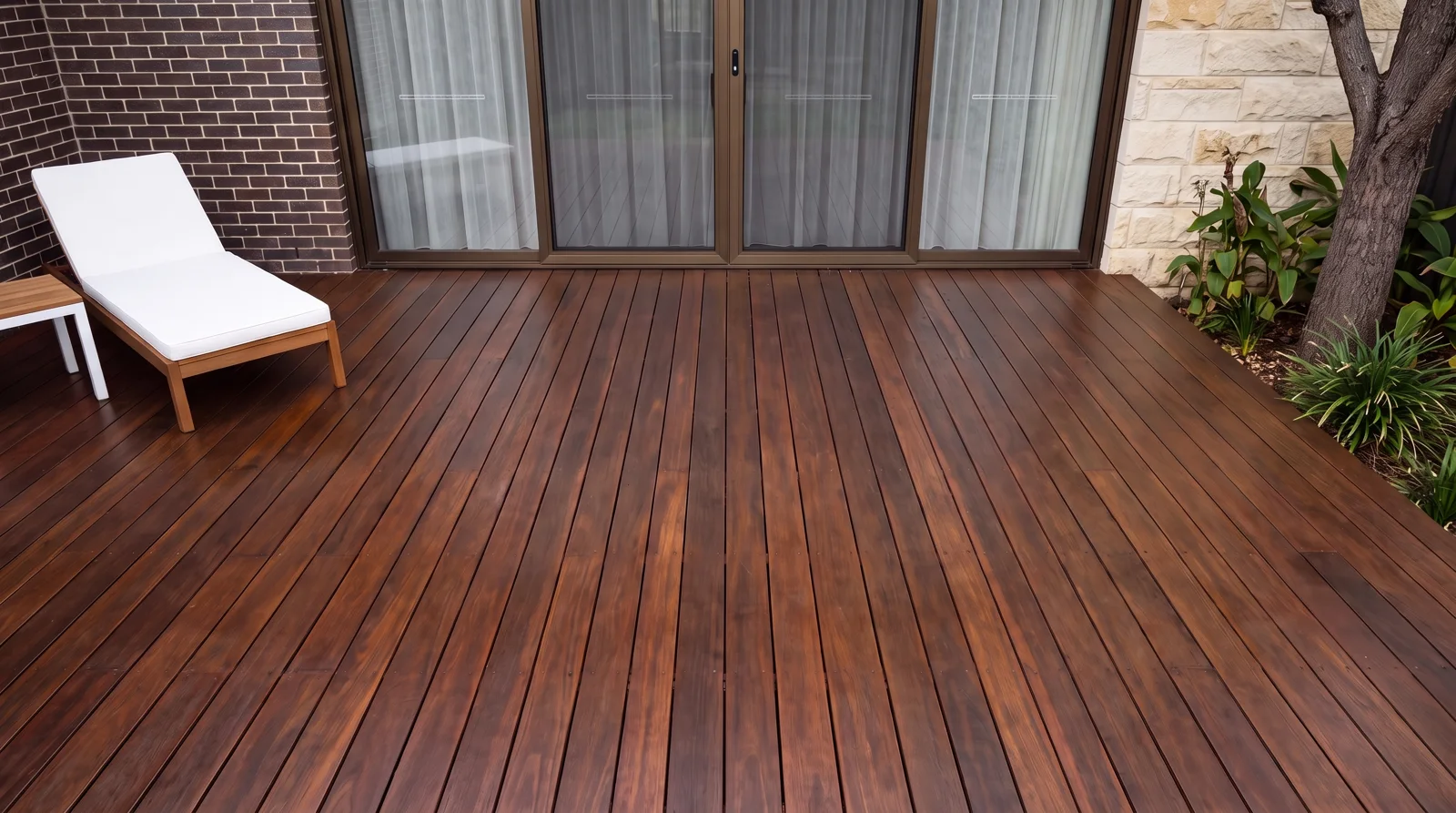
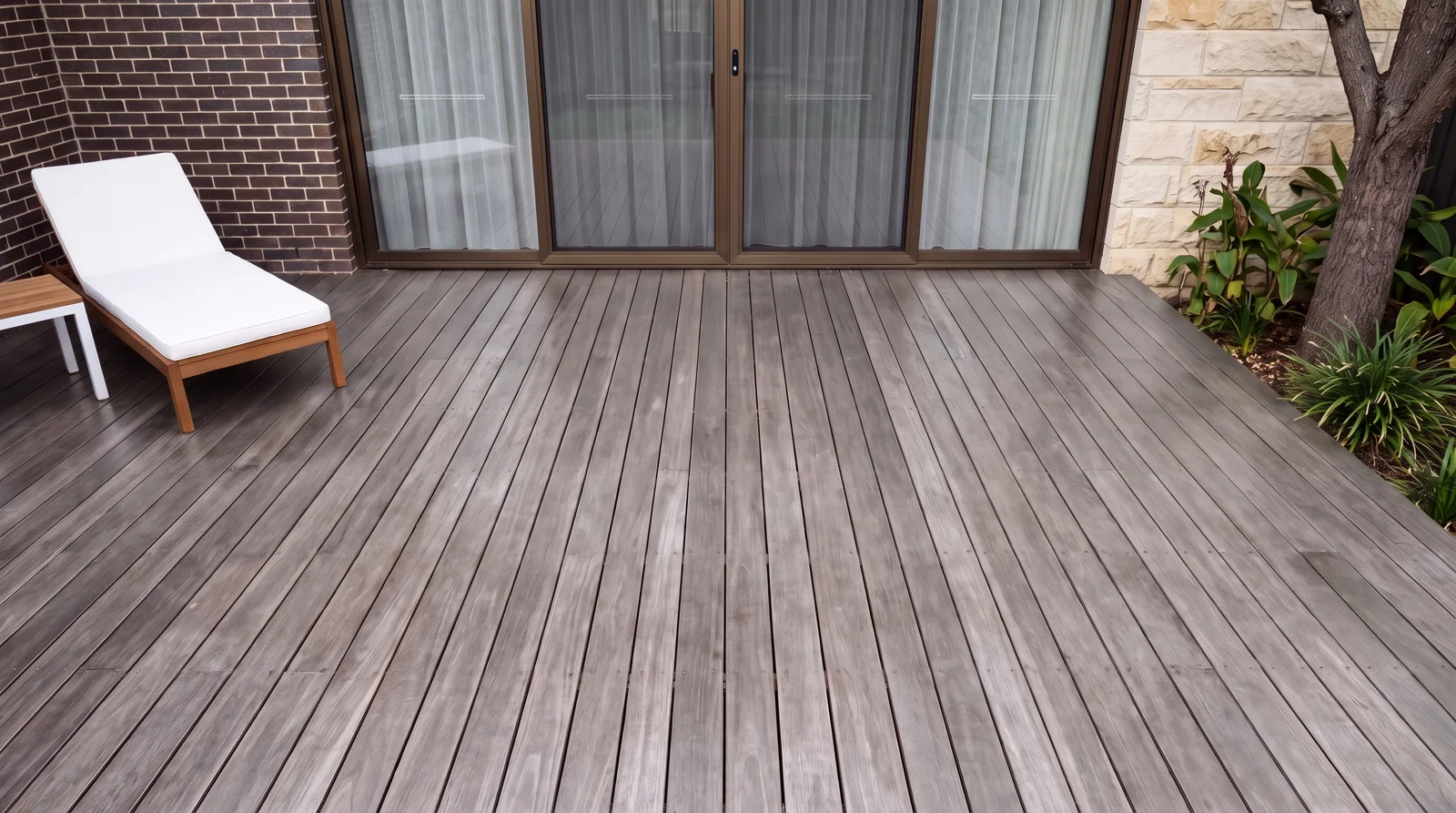
Visualization · Reference-matched surface scenarios. Appearance is illustrative; this is not a measured before-and-after project.
Keep the essential facts
Record the surface zones, species if established, existing finish, product name and batch, preparation method and application date. Add the instructions used at that time rather than relying on a product name alone. Keep photographs tied to locations and dates so later comparisons are meaningful.
Inspect by exposure
Focus attention on places with recurring wetting, debris, furniture contact and different sun exposure. Note changes rather than assigning a universal annual treatment. Inspection can lead to a small cleaning task, a local repair assessment or no action. Recoating automatically can create its own preparation problem.
Carry the history forward
When ownership or maintenance responsibility changes, hand over the product and condition records. Record uncertainty when older facts are missing. A concise history is more useful than an unsupported declaration that the deck was fully restored. Export the current plan and keep it with your property documents.
Make the next treatment easier to understand
Save the product identity, preparation, application date and area treated. Include the accepted test area and photographs taken under a stated surface condition. A note saying the deck was oiled does not identify what a later contractor needs to know.
Record spot repairs separately from whole-surface treatments. Different areas can have different coating histories, and the next preparation decision may depend on that history.
Use a location-based care log
| Entry | Example of useful detail |
|---|---|
| Area | North steps or plan zone C |
| Work | Cleaning trial, local renewal or full treatment |
| Products | Exact label references and instructions retained |
| Conditions | Relevant application and drying observations |
| Follow-up | Dated observation and unresolved questions |
In a fictional deck, a replacement board is treated later than the surrounding surface. Give it a location reference and separate entry. That prevents a future color difference from being mistaken for an unexplained change across the entire deck.
Keep costs and time in the log if the owner wants to improve future budgets. Observed work records are more useful than a fixed universal interval. Use the condition of the actual surface and the selected product instructions when deciding what to do next.
A DECK-CARE SITUATION
A deck-care situation
A later contractor receives a labeled sample photo, the finish product and the preparation notes. That history lets them ask targeted compatibility questions instead of starting with an unknown coating and a guess about the last treatment date.
Your review record
0 of 4 questions reviewed
A checked box records your review. It is not a professional approval.