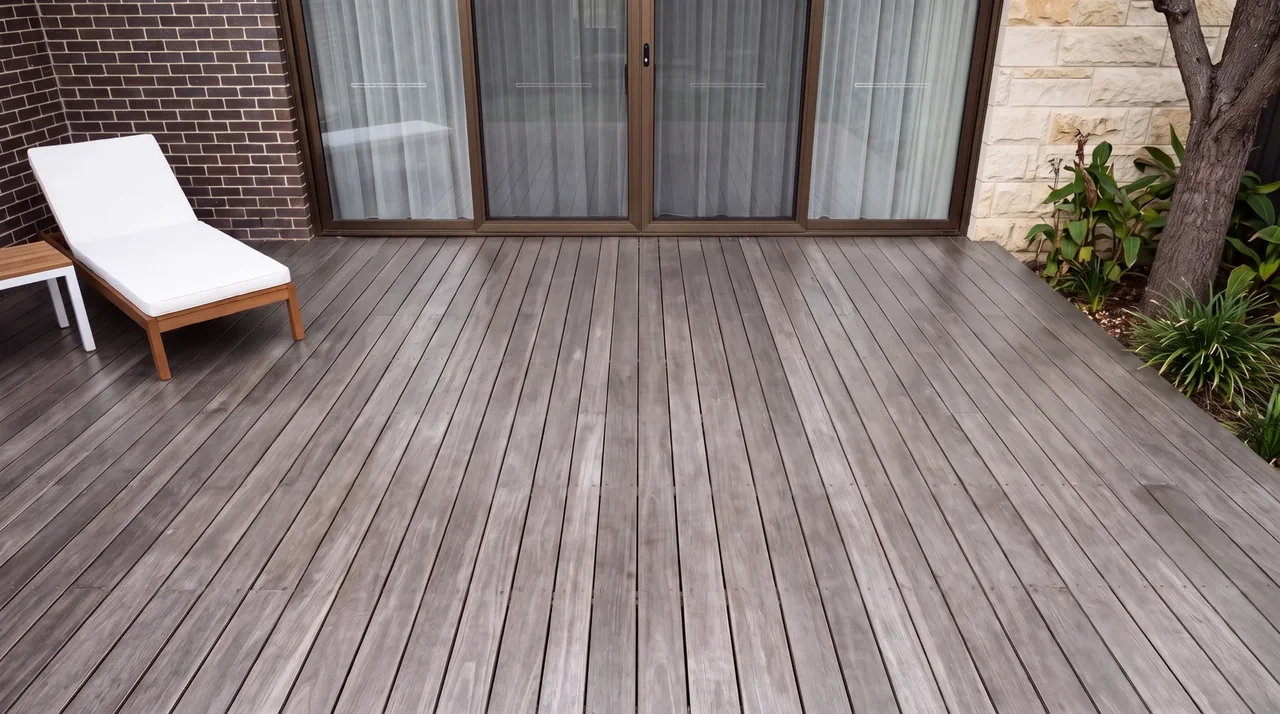
Gray deck boards in a small courtyard beside brick walls and planting.
Illustrative care scenario. It does not prescribe pressure, chemistry, drying time or establish a safe condition for a real deck.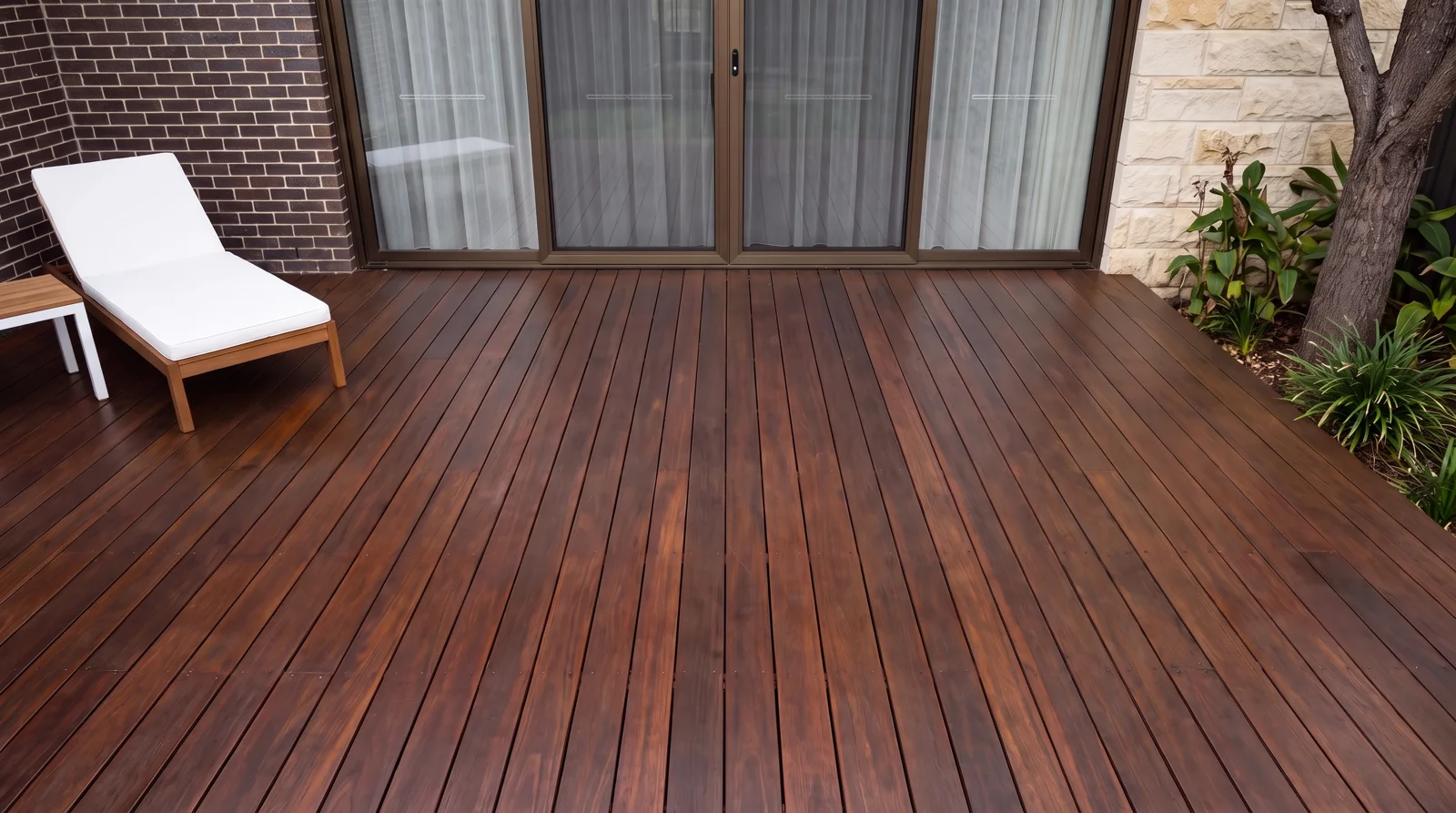
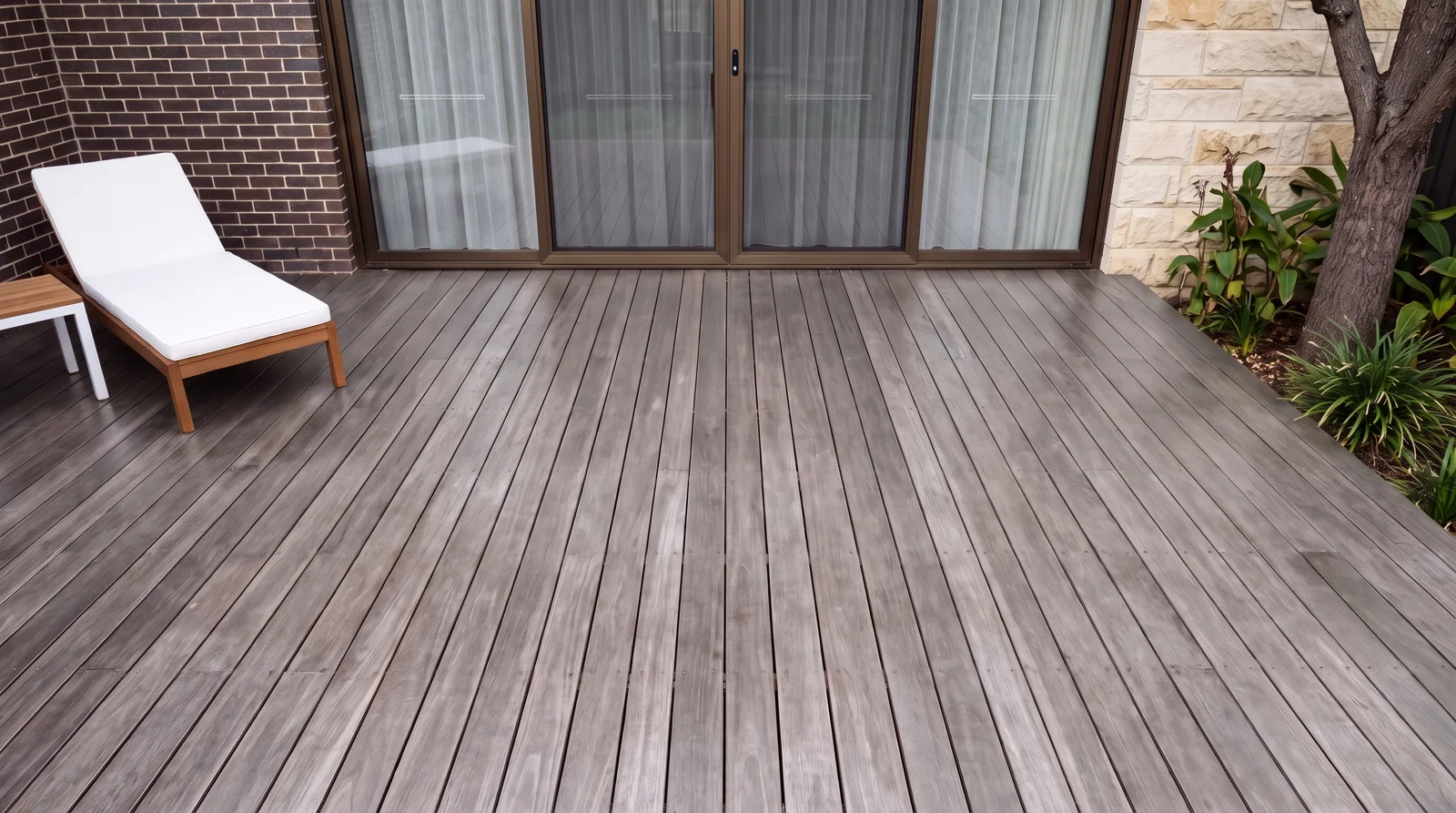
Visualization · Reference-matched surface scenarios. Appearance is illustrative; this is not a measured before-and-after project.
Start without disturbing the surface
Walk the perimeter from a safe position and note loose components, soft material, movement, sharp edges and areas that remain wet. Do not use an attractive surface as evidence of structural condition. If use may be unsafe, restrict access and obtain an on-site assessment. A web planner cannot clear the structure for use.
Create a condition map
Divide the deck into meaningful zones: open sun, shade, under furniture, near a door and around drainage. Photograph the same zone from a broad view and a close view. Note whether discoloration follows fasteners, water pathways or furniture footprints. That pattern is more useful than a single untitled close-up.
Choose the next task
A sound but dirty surface may need a cleaning trial. Loose or deteriorated parts need repair evaluation before coating. Persistent wetting needs its cause addressed. Unknown old paint needs a hazard and coating review before sanding or stripping. Keep those decisions separate so a finish purchase does not commit the project to the wrong sequence.
Decide whether the next step is cleaning, investigation or coating
A weathered color is not the same observation as loose boards, damaged connections or a failing coating. Walk the accessible surface and map the conditions before selecting a treatment. Record shaded and exposed areas separately where their appearance differs.
Ask what is already on the wood and what the owner wants next. Keeping a gray appearance and returning toward a finished color are different care objectives. Neither objective removes the need to investigate damage or unresolved assembly concerns.
Give each condition an appropriate next question
| Observation | Next question |
|---|---|
| General gray appearance | Is natural weathering the accepted appearance goal? |
| Patchy existing coating | What product and preparation history are known? |
| Localized staining | What nearby source or exposure should be investigated? |
| Loose or damaged components | What qualified assessment or repair is needed first? |
In a fictional deck, most boards are evenly gray but one area near a planter remains dark. Do not prescribe the same treatment solely from a wide photograph. Record the local conditions and use an appropriate test area after the underlying question is addressed.
Keep the initial observation photographs with the care record. They help distinguish what the treatment changed from conditions that were already present.
A DECK-CARE SITUATION
A deck-care situation
A deck has faded color across most boards and a soft area beside a leaking planter. Treating both as a refinishing problem could conceal the local deterioration. The care plan separates the planter-area assessment from any surface trial on the otherwise sound field.
Your review record
0 of 4 questions reviewed
A checked box records your review. It is not a professional approval.