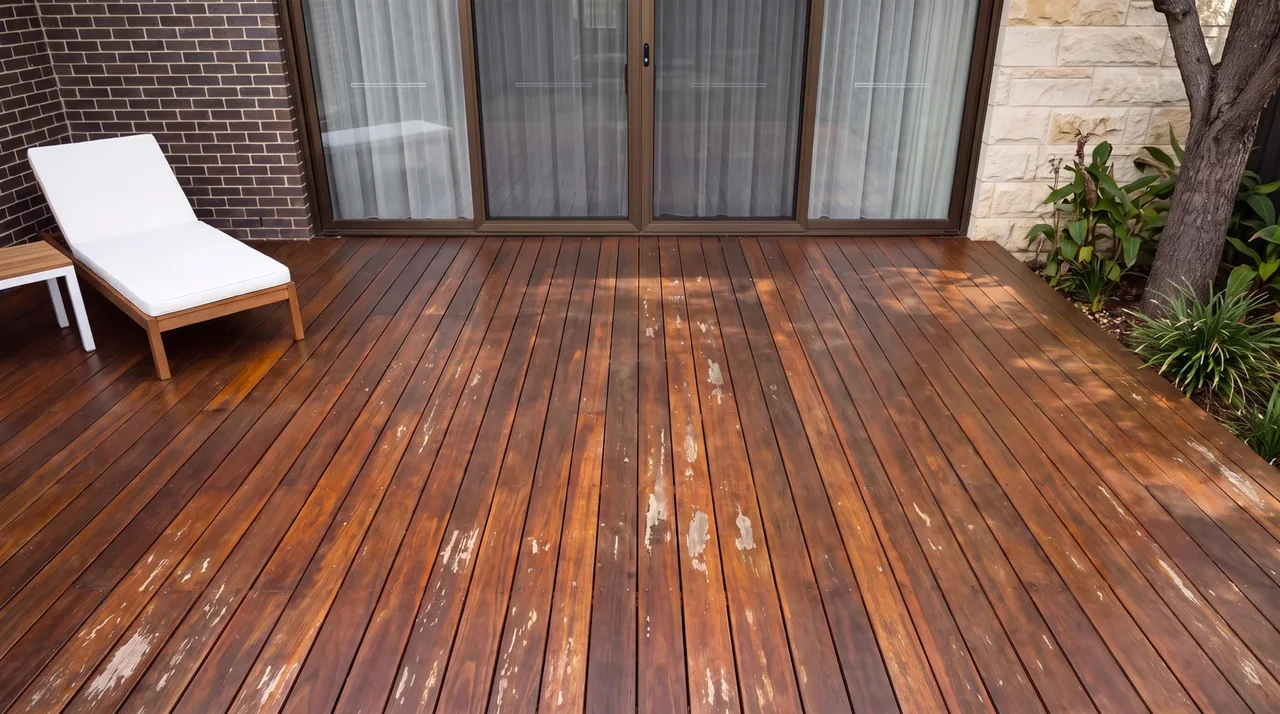
Patchy coating and exposed wood on a courtyard deck.
Illustrative care scenario. It does not prescribe pressure, chemistry, drying time or establish a safe condition for a real deck.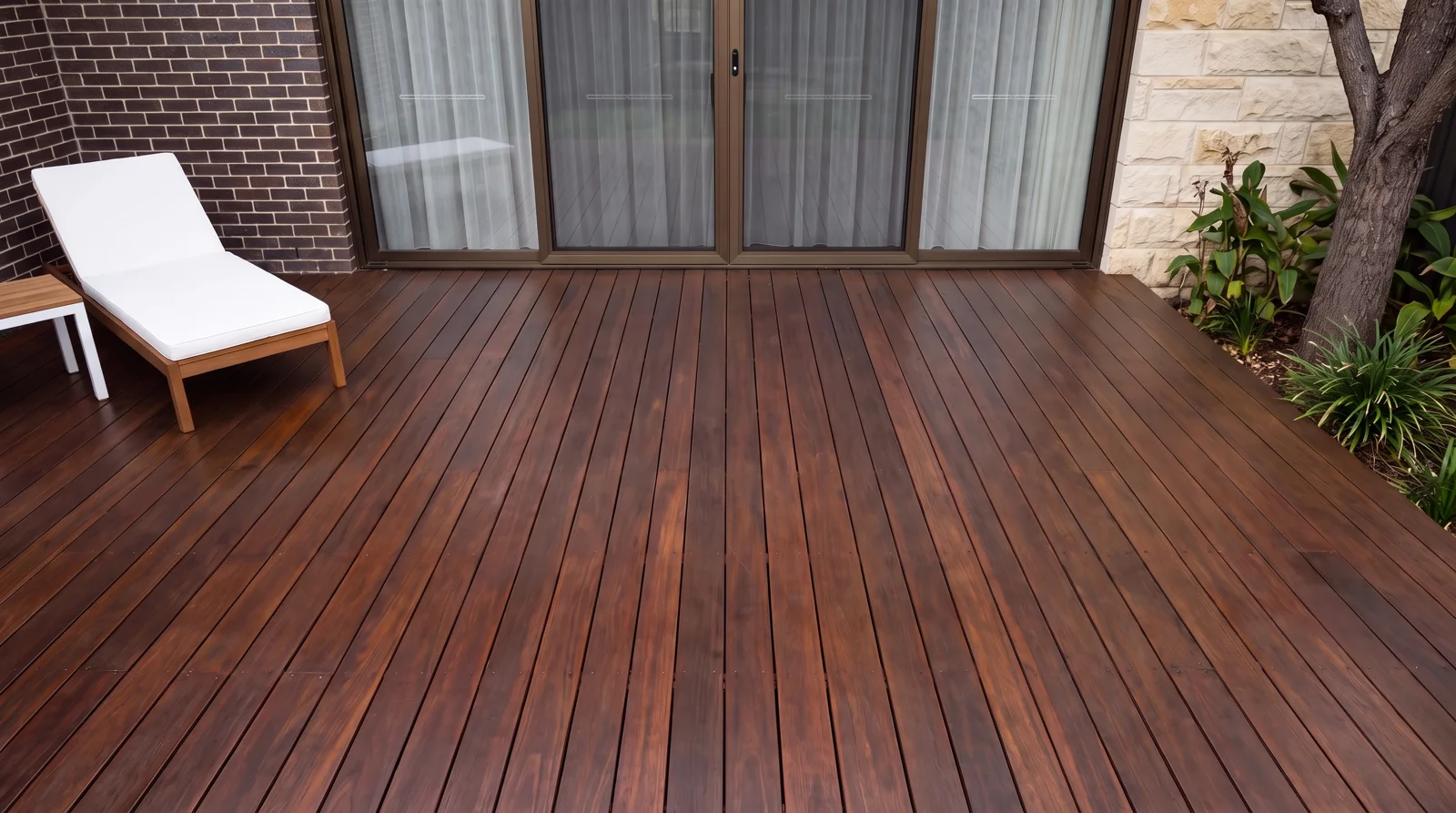
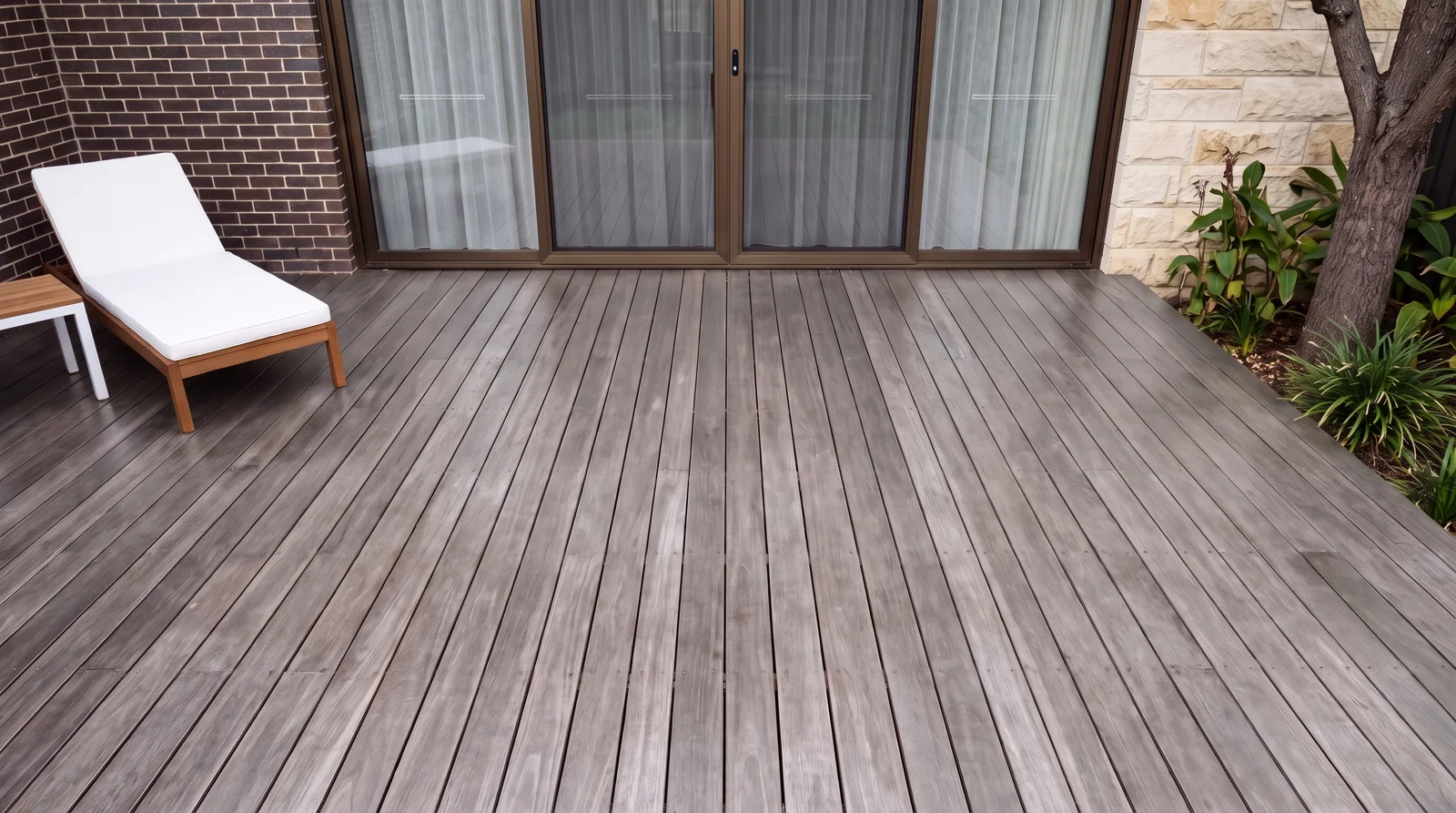
Visualization · Reference-matched surface scenarios. Appearance is illustrative; this is not a measured before-and-after project.
Find the record first
Look for an invoice, product container, maintenance note or installer record. Distinguish a penetrating treatment from a film-forming coating, but do not claim a product identity from appearance alone. Age, exposure and previous repairs can make different finishes look similar.
Address unknown old coatings
Before disturbing old painted surfaces, consider lead hazards and the rules applying to the property and work. EPA guidance for pre-1978 housing explains why renovation can create hazardous dust and why appropriate assessment and work practices matter. Do not sand an unknown coating simply to see what is underneath.
Confirm the new system
Ask the proposed finish manufacturer what preparation is required over the identified surface. Record whether removal, cleaning, drying or another treatment is needed. If the old system cannot be established, keep that uncertainty in the plan and seek product-specific guidance. A test area supports an appearance decision but does not establish chemical identity.
Look for the product record before reaching for a stripper
The most reliable starting point is the previous product container, invoice, maintenance log or contractor record. Record the exact product line and colour, not only a brand or a description such as deck oil. Different products sold by one manufacturer can have different preparation and recoating requirements. A familiar colour name does not establish chemistry or compatibility.
If records are unavailable, compare exposed and sheltered areas and note how the existing treatment behaves. Does there appear to be a continuous film? Are there discrete peeling edges? Is colour present mainly in the wood texture? These observations can guide a question to the finish manufacturer, but appearance alone may not identify the product precisely.
Distinguish a worn finish from material underneath it
A grey patch may be exposed wood, while an adjacent brown patch may retain a coating. A dark mark may lie on, in or beneath the old treatment. Photograph the transition before changing it. Scrubbing every area until it looks alike can remove the very evidence needed to understand the starting condition.
The USDA distinguishes penetrating finishes from film-forming systems and describes how their renewal demands differ. That is useful vocabulary for the investigation. It is not permission to classify every transparent-looking product as penetrating or every stain as non-film-forming. The current technical information for the identified product takes precedence.
| Evidence | Useful conclusion | Limit |
|---|---|---|
| Exact container and application record | Identifies the treatment used at that time | Later treatments may have been added |
| Distinct peeling film | Indicates a surface film is present | Does not identify its formulation |
| Protected area with retained colour | Shows a less-exposed comparison | May differ in preparation or coating thickness |
| Water behavior on the surface | Describes that observation | Does not prove compatibility or complete removal |
Ask a specific compatibility question
Give the proposed finish supplier the known old product, approximate treatment history, photographs of the dry surface and the intended new product. Ask what preparation and test are required for that combination. If the old product is unknown, say so. A recommendation based on bare wood should not be treated as approval to coat over an unidentified film.
Do not adopt a generic solvent test from an unrelated product and assume it identifies the coating conclusively. Some tests can alter the surface or create exposure concerns. Follow a procedure provided for the actual investigation by the relevant manufacturer or qualified restoration professional.
Make the choice between renewal and removal explicit
If the existing system can be renewed under its instructions, the work may differ substantially from changing finish types or removing a failed film. Compare the required preparation, access and expected appearance of those options before treating the whole deck. A small accepted sample should demonstrate the proposed complete sequence, not just its first cleaning step.
Keep any unknown layer in the record. An inability to identify it is useful information and may affect the selected restoration approach. The USDA exterior-stains report supports the finish-category distinctions, while the test-area guide helps organize a limited trial. Neither replaces product-specific removal or application instructions.
A DECK-CARE SITUATION
A deck-care situation
The owner remembers an oil-like product, while the surface now shows localized peeling. The plan records the product as unknown until paperwork or qualified evaluation resolves it. That prevents an unsupported recoating assumption from becoming the purchase specification.
Your review record
0 of 4 questions reviewed
A checked box records your review. It is not a professional approval.