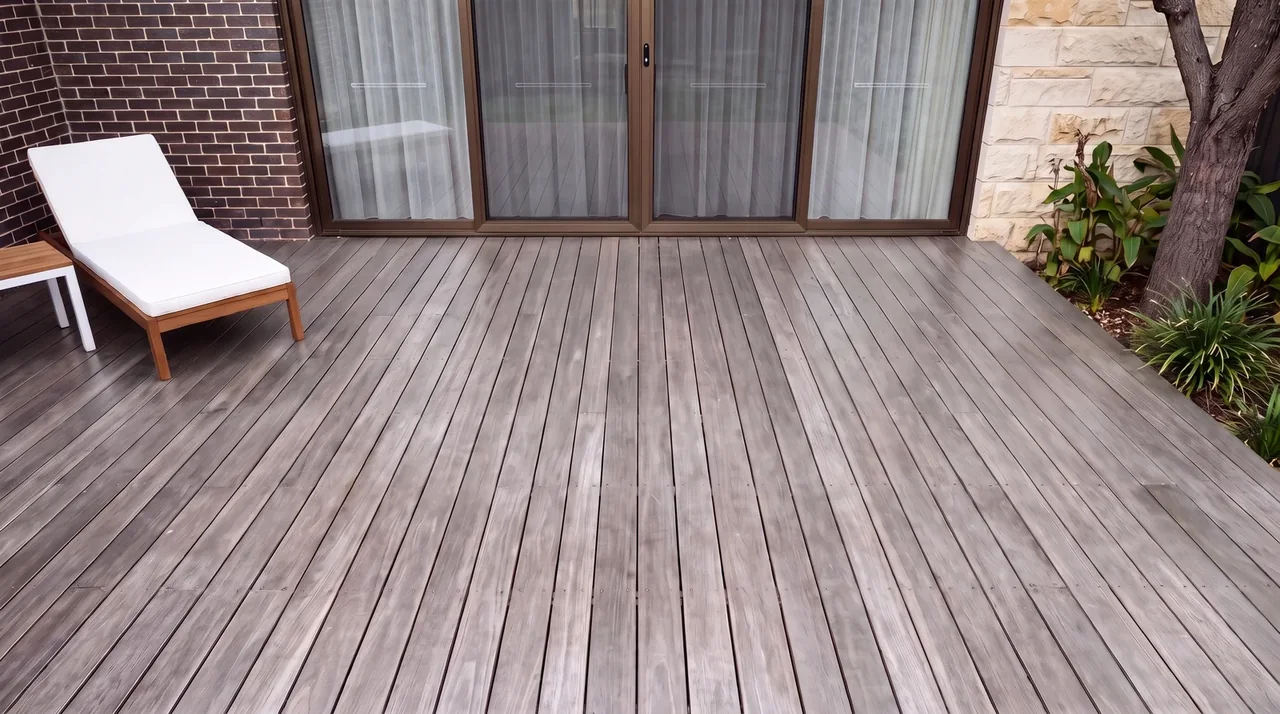
An even, pale wood deck surface in the same courtyard setting.
Illustrative care scenario. It does not prescribe pressure, chemistry, drying time or establish a safe condition for a real deck.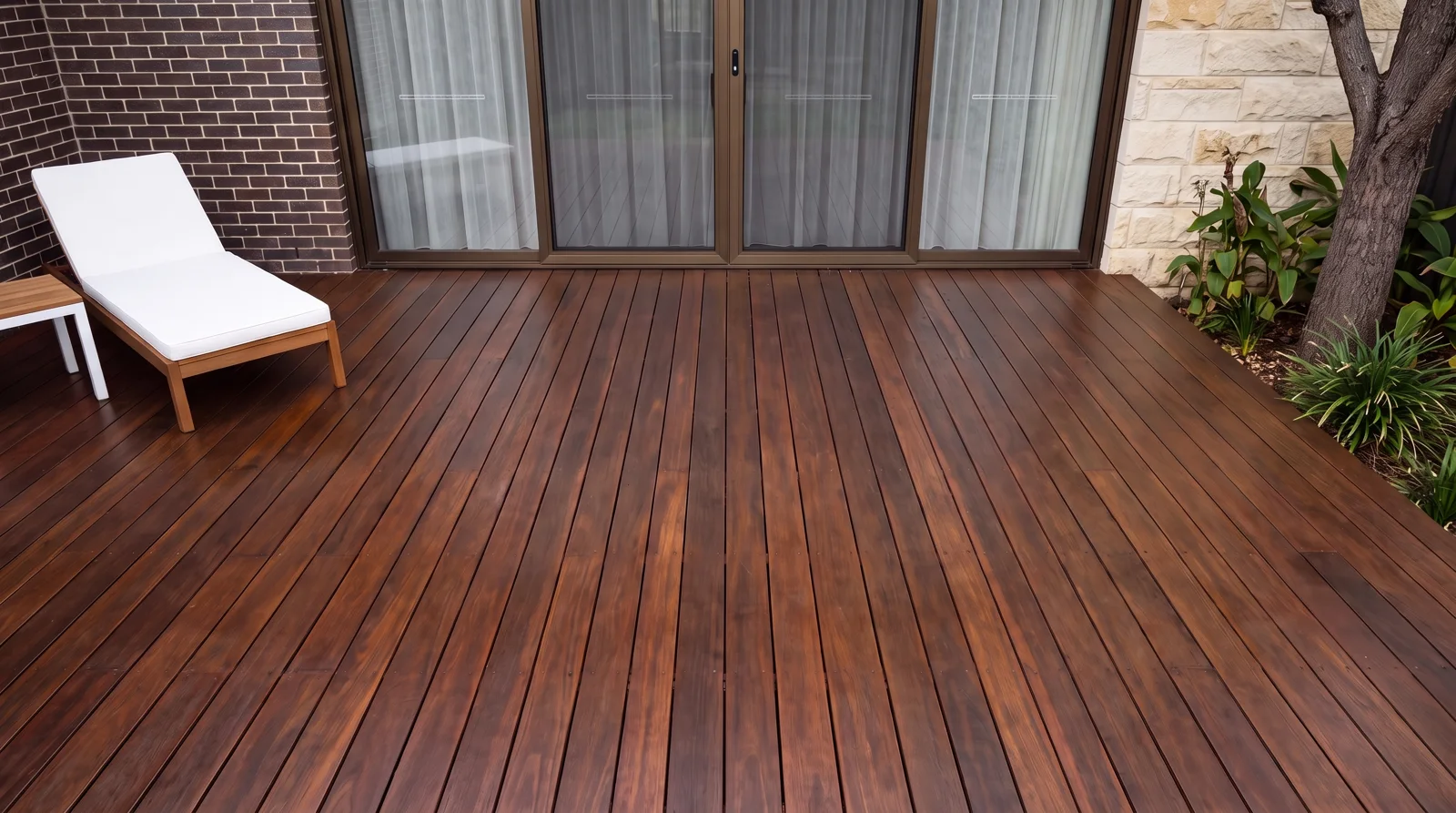
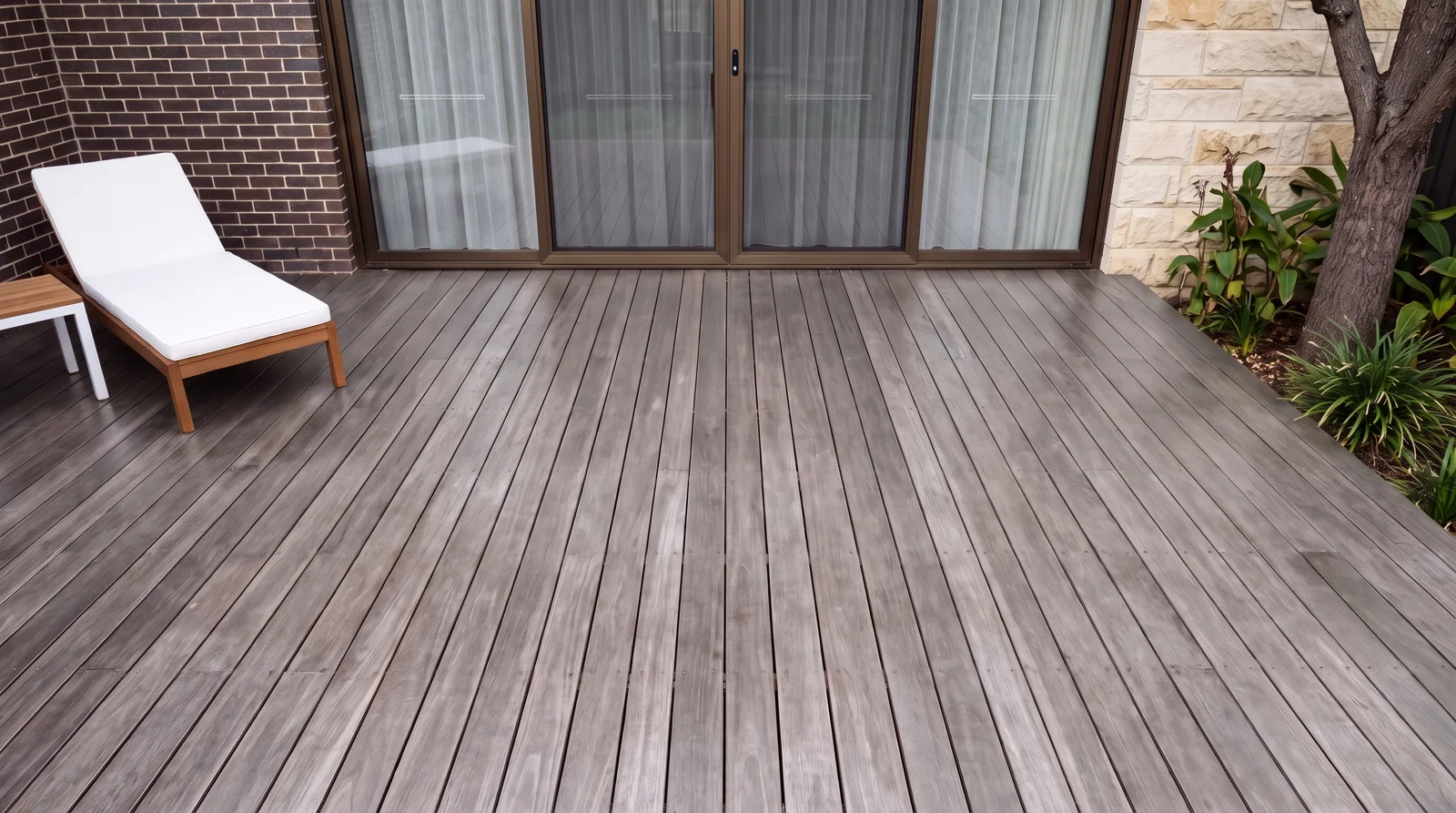
Visualization · Reference-matched surface scenarios. Appearance is illustrative; this is not a measured before-and-after project.
Finish the assessment first
Cleaning and sanding do not repair an unsafe assembly. Complete the condition review and resolve persistent water pathways before preparing a surface for coating. Remove or protect fixtures and adjacent materials according to the work plan; improvised protection can redirect wash water into new places.
Follow the preparation specification
The selected finish should determine acceptable surface condition and any sanding sequence. Avoid universal grit, moisture or drying-day prescriptions. Different substrates and existing coatings need different treatment. Record the sequence, the required conditions and the inspection point before the first full application.
Inspect before application
Review the prepared area for remaining coating, residue, damaged fibers and inconsistent areas. Confirm cleaning products were rinsed or otherwise handled as directed. Use the documented moisture and environmental requirements rather than assuming that a surface that feels dry is ready. Keep a small approved sample as the reference for the rest of the work.
Define a prepared surface by the selected product instructions
Preparation depends on the existing surface and the next treatment. Obtain the selected product’s instructions for cleaning, removal of incompatible material, drying and application conditions. Do not assume that one sanding or washing recipe applies to every finish.
Use a representative test area that includes the condition you need to address. Record the method, product and sequence actually used. Review the result after the stated drying conditions rather than judging only the wet appearance.
Keep the preparation trial reproducible
| Trial field | Record |
|---|---|
| Starting condition | Existing finish and visible surface condition |
| Method | Tools and product-specific process |
| Environment | Conditions relevant to the product instructions |
| Result | Appearance and any unresolved issue |
| Decision | Accepted process or further review needed |
For a fictional restoration, a small trial reveals a color difference between previously sheltered and exposed boards. That finding belongs in the appearance discussion before the whole deck is treated. It is not evidence that more aggressive preparation is automatically appropriate.
Protect adjacent materials and follow the product’s handling and disposal instructions. Preparation should not conceal a structural or connection concern; resolve that through the appropriate assessment before proceeding with cosmetic work.
A DECK-CARE SITUATION
A deck-care situation
A shaded section remains different from the sunny field after the same cleaning pass. Instead of applying a second coat of finish to hide the difference, the crew checks whether preparation and readiness are consistent. More finish is not a substitute for resolving the substrate.
Your review record
0 of 4 questions reviewed
A checked box records your review. It is not a professional approval.