An even finish starts before the oil.
Compare application outcomes, review preparation and calculate finish from the selected product’s label.
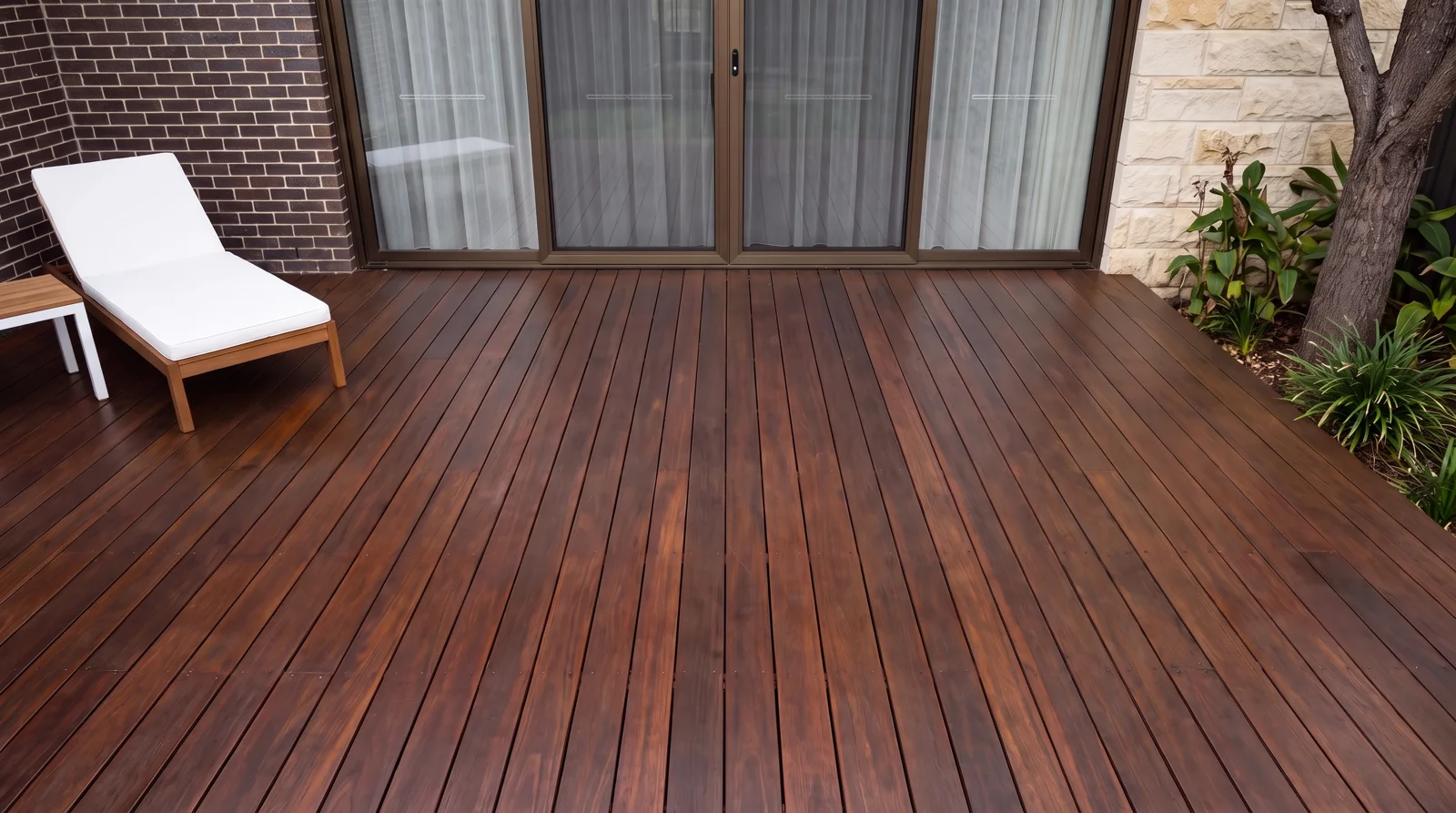
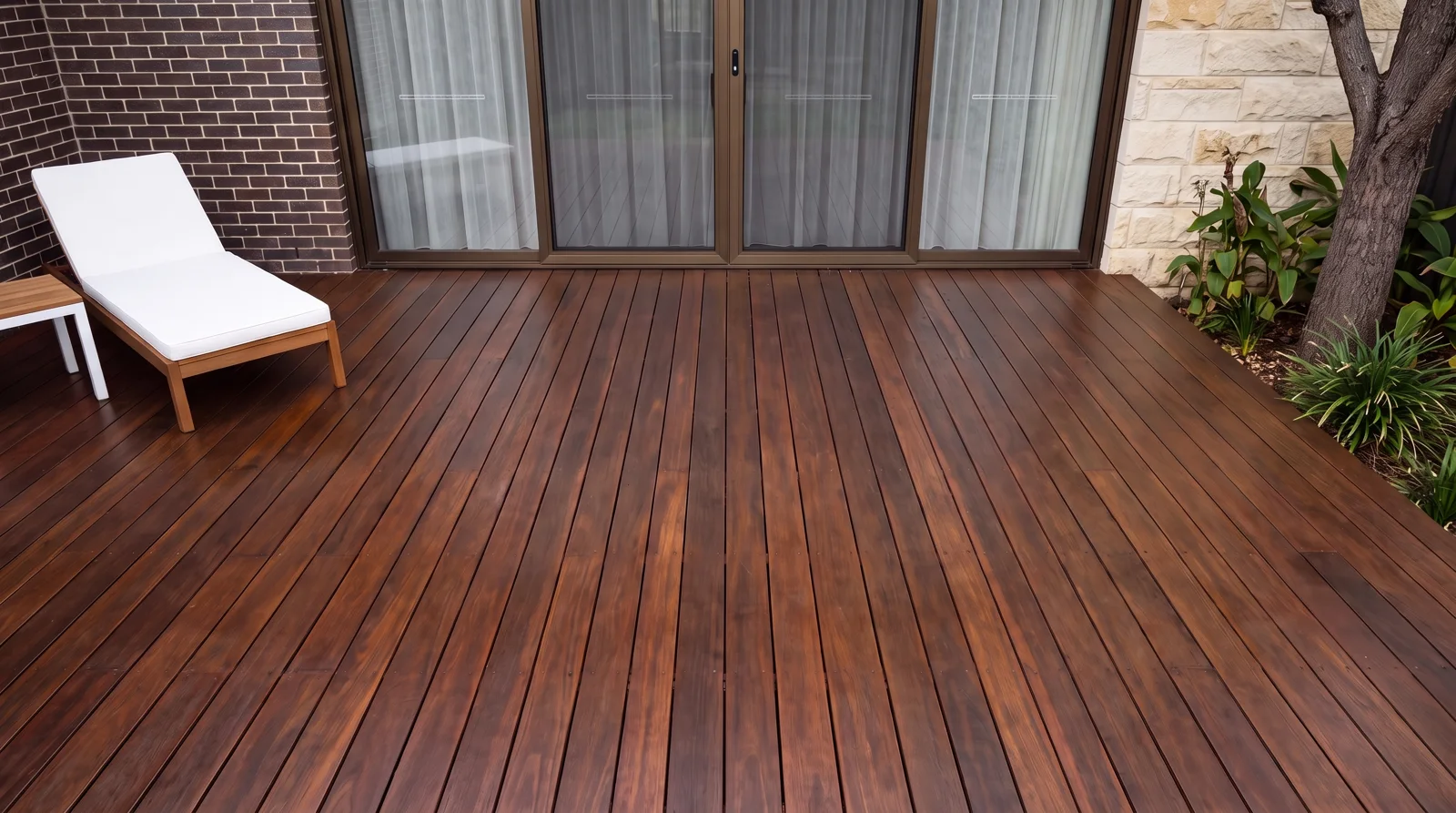
Visualization · Reference-matched surface scenarios. Appearance is illustrative; this is not a measured before-and-after project.
CONTROLLED / PROBLEM APPROACH
Change the method.
See what matters.
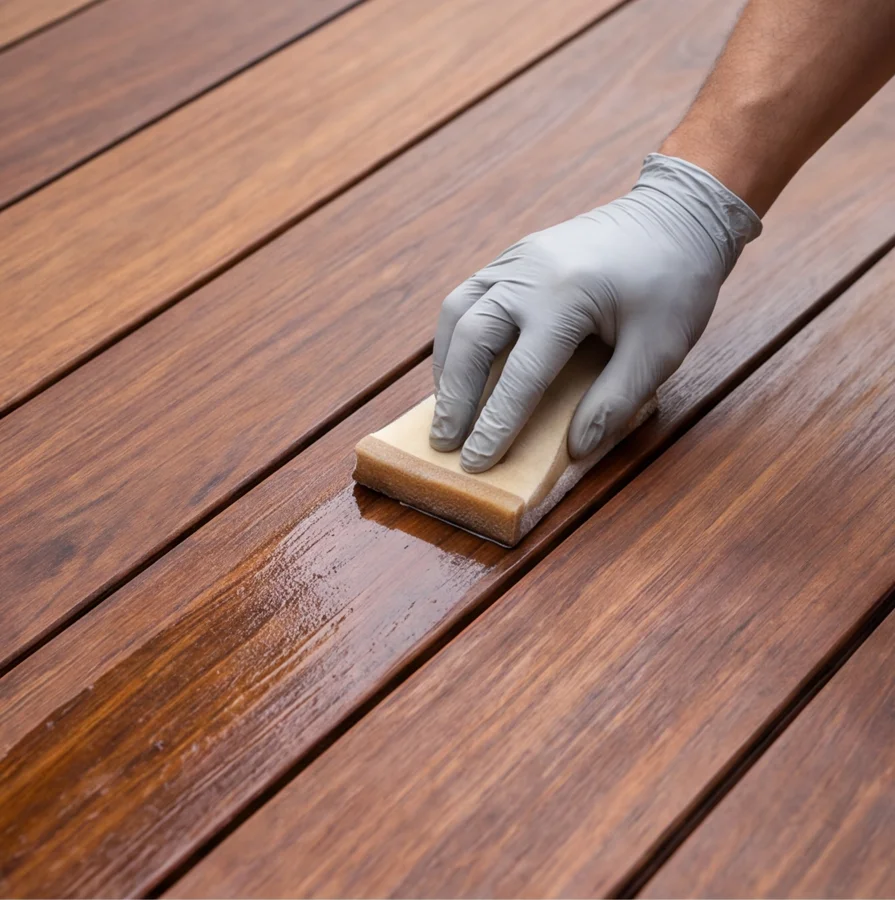
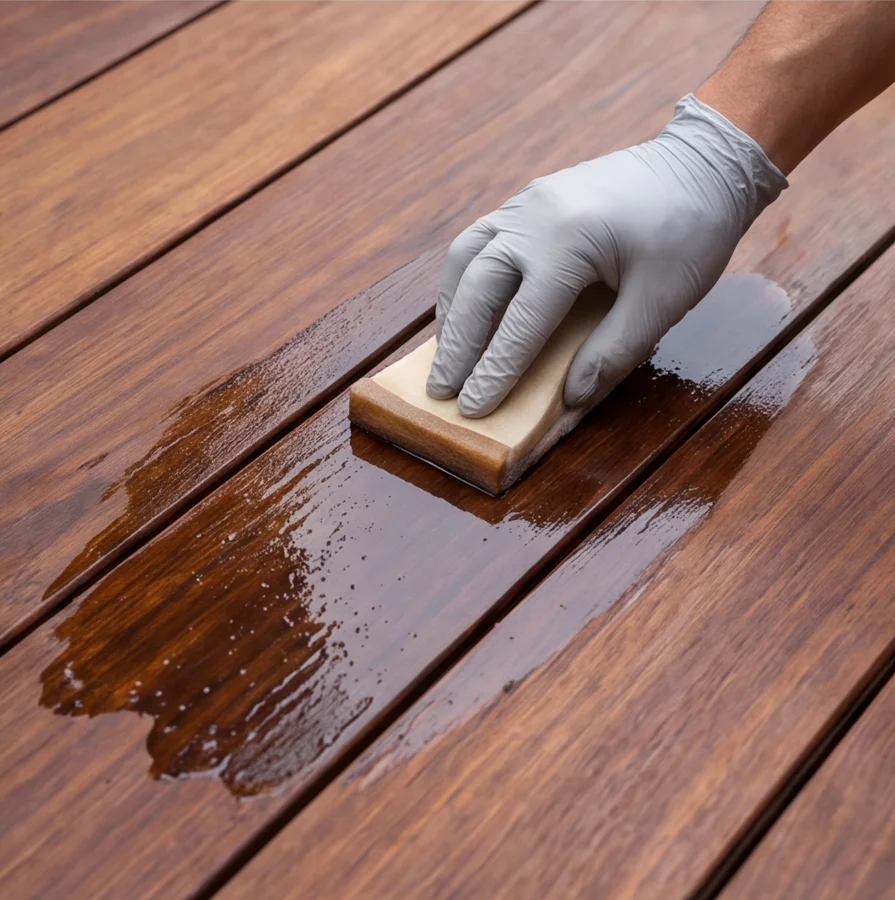
Visualization · Reference-matched surface scenarios. Appearance is illustrative; this is not a measured before-and-after project.
Even application, not excess
Controlled: An even application following the selected finish label.
Problem: Pooling and patchy excess are a reason to stop and review.
Application amount and excess removal are product-specific. Do not apply a second coat just to cover a problem.
Other mistakes to investigate
- Uneven sanding: verify preparation before extending a trial.
- Trapped moisture: fix the wetting source and verify readiness.
- Incompatible treatments: identify old and proposed products before combining steps.
- Ignored metal staining: investigate the connection and water pathways, not only the color.
Calculate from the label.
Use measured area and the chosen finish’s documented coverage. This image cannot determine coats, coverage, compatibility or curing requirements.
Open the finish calculator ↗Evidence behind the workflow
Visualizations organize observations. The actual product label, coating history and on-site assessment control the work. No image establishes species identity, moisture readiness, chemical compatibility or structural condition.
Build a condition-based care plan ↗Continue the study
The restoration studio
Explore one deck through surface conditions, inspection and two different appearance goals.
What am I looking at?
Move from the full deck to a board and surface detail. Compare visual clues without treating them as a diagnosis.
A gray deck can still be your goal.
Compare naturally weathered, dirty and cleaned-gray Ipe appearance scenarios.
Restore color. Respect the sequence.
Explore assessment, cleaning, drying, preparation and optional finishing on the same reference deck.